

IOMI · Operational Infrastructure for the Real Estate Market

Where it all should have started.

The real estate market deserved to work better. It always did.

A sector that moves a lifetime's assets still works with each property's information spread across many hands.

Keep reading
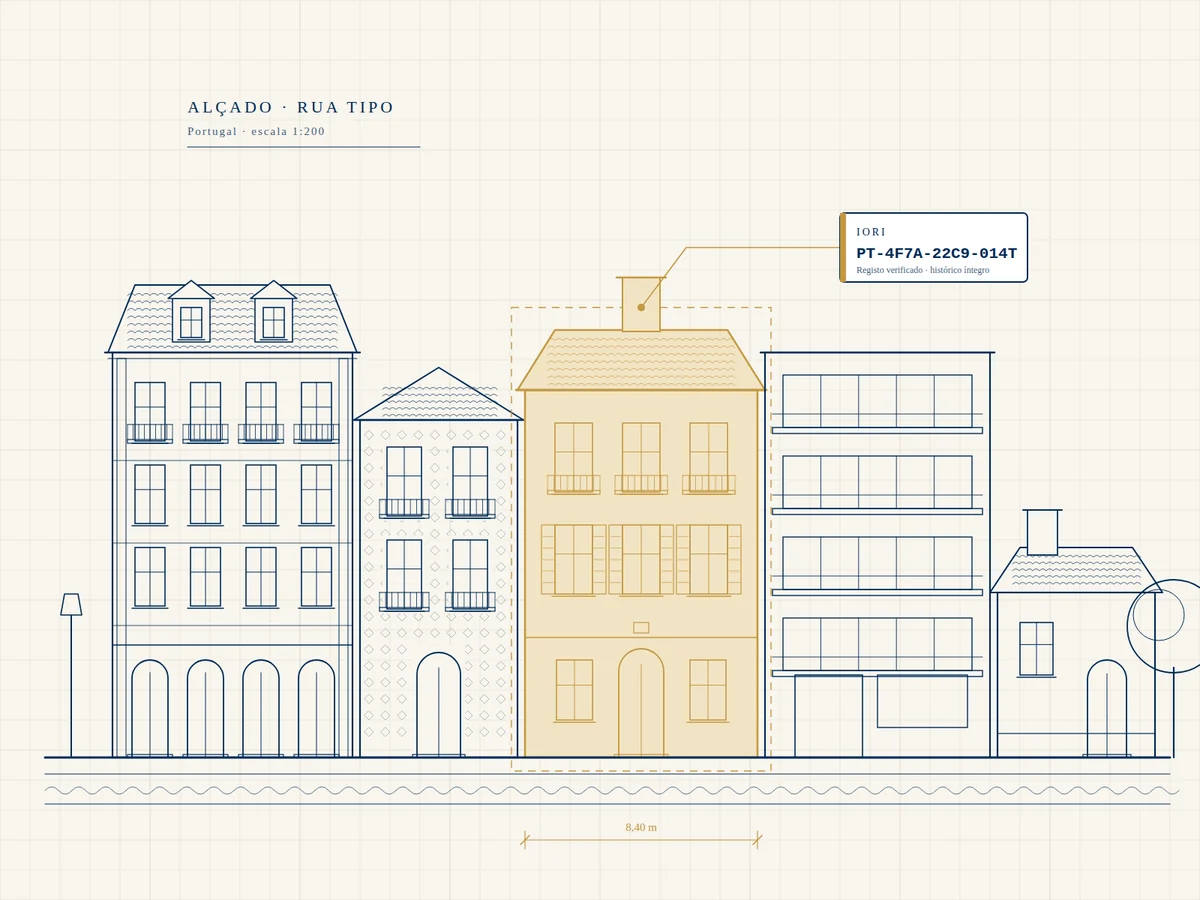
Technical drawing of a Portuguese street, with one of the buildings highlighted in gold

For those who work in the sector

How many calls did it take to win your last listing?

  1. Calls
  2. Viewings
  3. Conversations
  4. Listing
  5. Saleor no sale
  6. Carries on
Years in the profession, and every morning feels like the first.

How many viewings. How many conversations spent persuading, waiting, renegotiating. How many times you went back to square one because someone else got there first, or because the same home was already with three agencies.

And when you finally win it, you hold on to it. You don't share, because you don't know if it will come back. You don't trust, because nobody records who did what. The property sits still, waiting for a buyer who may have been in a colleague's portfolio.

Then the listing goes onto the website, the CRM, the portals and social media, and everyone waits for the sale to happen. Often it doesn't. Attention has already moved to the next listing, and the home that took so much effort to win stays unsold.

And when you do sell it, you are no closer to anything. You start again. The portfolio has an empty slot and you need to win another home. More calls, more viewings, more conversations.

We spend our days fighting for the listing. There is little left for what really matters: selling it.

For those who own

You hand over your most valuable asset and lose track of what happens to it.

Who is showing it. Who it was shared with. Why there are three listings with three different prices. Why the phone keeps ringing with agencies you never called and, when you need answers, nobody has them.

The same home, three listings. Illustrative example.

The whole sector

This has a name: fragmentation.

It is not a people problem. It is a sector problem. Capable professionals do the same work twice, chase the same home and keep information they have no safe way to share. Every agency, portal and network keeps its own version of the same property.

Suspicious owners. Buyers lost among repeated listings.

Fragmented. Duplicated. And, for a long time, with no alternative.

In real estate, we put merit in the wrong place.

We celebrate whoever won the listing and treat the sale as if it were guaranteed.

But winning a home shouldn't be the battle. The battle, the effort that deserves recognition, is selling it well.

  • What if finding the property were simple?
  • What if every contribution were recorded, and sharing stopped being a risk?
  • What if all the effort went where it creates value?

None of this happened by chance, or through anyone's fault.

It happened because a piece was missing: a place where each property's information lived whole, verified and the same for everyone, instead of broken into a thousand pieces.

The land registry brought order to ownership. Something was missing to bring order to the way property moves through the market.

That piece now exists. It's IOMI.

It is not an agency nor a regulator. It is the missing infrastructure: it connects owners, professionals and buyers to the same information about each property, with access rules and a history that stays.

We stop fighting for the listing. We start fighting for the sale.

Each party's place

From regulation to operation. From operation to the market.

From the State to the buyer, everyone has a role. IOMI connects the parts without taking anyone's place: it organises the missing operational layer between the property's official documents and the work of those who sell it.

1Public framework

  • Parliament and GovernmentMake the sector's laws, including the real estate brokerage regime.
  • IMPICLicenses and supervises real estate brokerage firms (AMI licence).
  • Tax and Customs AuthorityProperty tax record (caderneta predial) and taxes on the property.
  • Land RegistryPermanent certificate: who owns it and what charges exist.
  • Municipal councilsOccupancy licence and floor plans.
  • ADENERuns the energy certification system for buildings.

2Operational layer

IOMIOperational Infrastructure for the Real Estate Market
  • One record per property, with an IORI
  • Documents verified
  • Access and rights with authorisation
  • Requests, viewings, offers and history

It does not replace any public body and does not provide legal certification.

3Market participants

  • OwnerRegisters the property, sets the terms, authorises access and decides.
  • Brokerage firmsWin listings, market them and follow buyers, viewings and offers.
  • BuyerReceives consistent information through the professional assisting them.

Outside IOMI, everyone keeps their own role: banks and credit intermediaries, valuers, lawyers, solicitors and notaries.

Market. The property and the buyer meet with more context and less noise. The owner still decides; the professional still sells.

The flow, step by step

The same journey, today and with IOMI.

Choose your side and compare the same journey, before and after. The gold dots show where IOMI takes part.

Owner

Today

Everyone with their own piece.

  1. Several agencies contact the owner, or the owner contacts several.

    Each one asks for the same documents and photographs the home its own way.

  2. Signs with whoever got there first, not always with time to compare.

    Exclusivity is decided with nothing to compare it against.

  3. The property appears on several portals and websites.

    Three listings, three prices and information you don't recognise.

  4. Viewings and offers arrive by phone and messages.

    You only know what you are told.

  5. If it doesn't sell, the listing ends.

    The history is lost and everything starts from scratch.

So the owner loses control of the process and trust in those handling it.

With IOMI

One record, the same rules.

  1. Registers the property once, at no cost.

    IOMI verifies the documents and assigns the IORI.

  2. Receives requests from validated firms and responds: accepts, declines or counter-proposes.

    IOMI confirms the AMI licence and gathers the requests in one place.

  3. Sets the price and the commission.

    IOMI shows price, commission and buyer costs separately.

  4. Follows access, viewings and offers.

    IOMI records everything with date and author.

  5. Confirms the reservation or, if there is no sale, decides the next step.

    IOMI preserves the history; the decision remains yours.

So the owner decides with information and stays in control, and nothing that was done is lost.

Professional

Today

Everyone with their own piece.

  1. Days of calls, door-knocking and conversations for each listing.

    All the time goes into winning the home.

  2. The same home is listed with several agencies.

    Whoever gets there first wins, not whoever sells best.

  3. Once the home is listed, people trust the website, the CRM, the portals and social media to sell it.

    Promoting is not selling: many listings never reach a sale.

  4. Viewings, feedback and offers stay in notebooks, emails and messages.

    Nothing proves the work done.

  5. Without a sale, the listing is lost.

    The owner stops trusting and everything starts again.

So all the effort goes into getting the listing, not into the sale.

With IOMI

One record, the same rules.

  1. Finds verified properties in one place and opens the full file of those that interest them.

    IOMI verifies the documents and organises the catalogue.

  2. Sends the listing request; the owner responds on the platform.

    IOMI applies written rules, the same for everyone.

  3. Focuses on selling: buyers, viewings and negotiation.

    IOMI organises requests, viewings and offers.

  4. Every contribution is recorded and counts towards their track record.

    IOMI records it with date and author.

  5. Sale or no sale: reviews the journey with the owner and, with authorisation, carries on.

    IOMI preserves the context of what was done.

So time goes where it creates value: selling. And the work done is never lost.

IOMI explained

Hear IOMI explain IOMI.

Four short presentations, with our virtual assistant, captions and voice. Choose where to start.

When you see it working, you'll ask yourself the same question we did:

Why wasn't it always like this?

See how it works

IOMI Pioneers. The first 50 approved firms get 3 months free and 50% off for the following 12 months.